Behavioural
Economics
Session 10


Joshua
Foster
Agenda
- Case: Disney in the Age of Agentic Creation.
- Economics of Agentic AI.
- Theory of the Firm
- Principal-Agent Problems
Why do we have markets?
Why do we have firms?
When should we use
markets vs firms?
Ronald Coase's Theory of the Firm
Firms exist because organizing some activities internally can be cheaper than constantly contracting in the open market due to their transaction costs.
Why don't firms grow indefinitely?
- Why don't bigger firms simply replicate smaller ones?
- Why don't they exercise hierarchical control when doing so yields net gains?
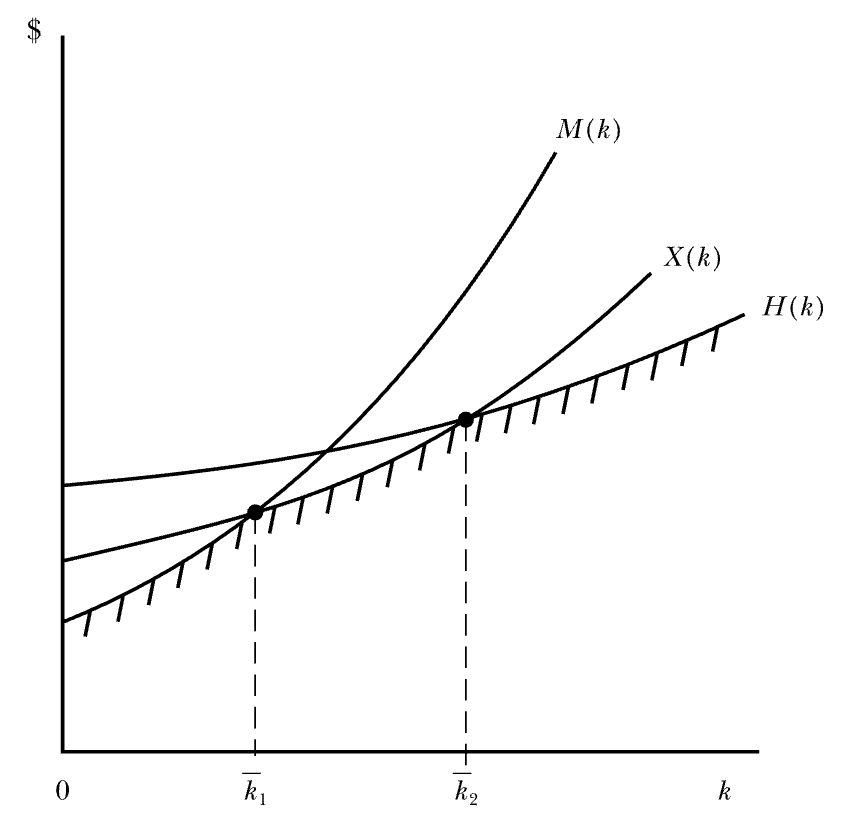
Simple cost analysis. Let
\(C_M =\) expected transaction cost per unit via market, and
\(C_F =\) expected coordination cost per unit within the firm.
Then the firm boundary is defined by the condition:
\(C_M(k^*) = C_F(k^*)\)
where \(k^*\) is the specificity of activity where the costs equalize.
Comparative Costs of Governance
What is agentic AI?
In what sense are firms already agentic, even before AI?
How does agentic AI change the nature of a firm's agency?
How does agentic AI change the costs of engaging with the open market?
How does an agentic AI system change the internal costs of a firm?
How does this change the comparative costs of governance?
Using this model, what do you predict agentic AI will do to firm composition in general?
Disney's Value Chain
- Franchise IP and canon (worlds, characters, ...)
- Production (writing, design, ...)
- Distribution (movies, Disney+, ...
- Experential goods (parks, products, ...)
- Brand trust and safety (family friendly)
Disney: A New Firm Boundary
- Open Studio Platform: a global ecosystem of creators and agentic tools.
- Integrated Canon Engine: a proprietary toolchain for writing, design, and post-production.
- Hybrid Guild: strategic partnerships in curated creator marketplaces.
How do these options engage with governance costs?
How does the use of external markets and contracts threaten Disney's value chain?
Principal-Agent Problem
When one party (the principal) hires another (the agent) to act on their behalf, but their interests aren’t perfectly aligned.
How can firms utilize agentic AI to solve the principal-agent problem (broadly speaking).
Which option is best for Disney's value chain?
How does this analysis inform our understanding of the demand for human labour alongside agentic AI?
What would we need analyze to better understand the economic tradeoffs of human vs. agentic AI labour?
Key Takeaways.
- Firms exist because markets are costly to use. Coase showed that when transaction costs are high, internal coordination through hierarchy can be more efficient.
- Agentic AI reshapes the boundary between market and firm. It lowers both transaction and coordination costs, forcing firms like Disney to reconsider what stays inside versus moves to the market.
- Agency problems don’t disappear, they evolve. As AI becomes a decision-making agent, the challenge becomes designing incentives, oversight, and accountability so that both human and artificial agents act in the firm’s best interest.